
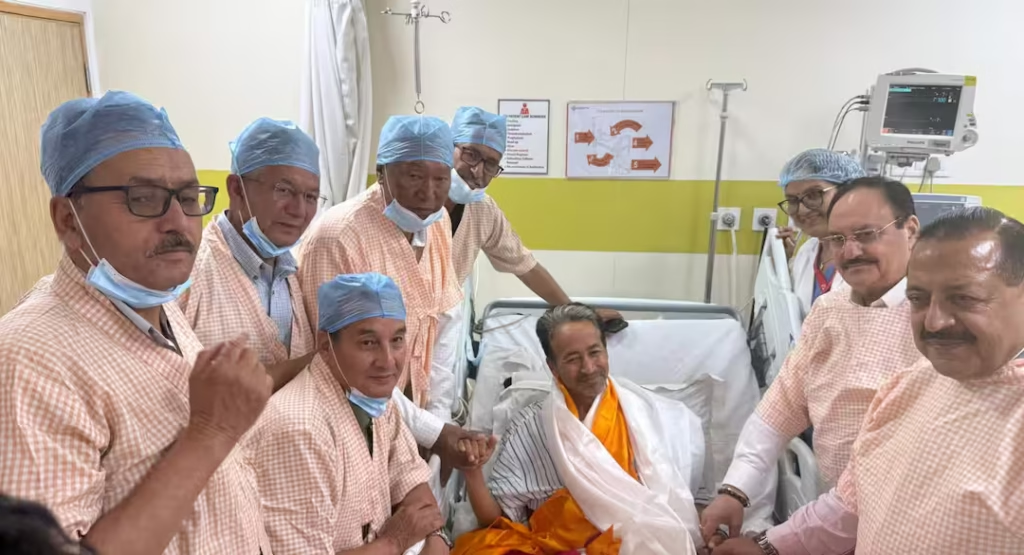
India has a long history of peaceful protests and democratic movements. Sonam Wangchuk From the freedom struggle to modern-day social campaigns, non-violent demonstrations have played a significant role in bringing public concerns to the attention of policymakers.
One such movement that recently captured national attention was the 26-day hunger strike by social activist Sonam Wangchuk. As his health deteriorated and public support continued to grow, the Central Government intensified discussions with protest representatives. Eventually, after receiving official assurances, Wangchuk ended his fast, marking an important moment in the ongoing dialogue between citizens and the government.
This article explains the complete story, the background of the protest, the negotiations that led to its conclusion, and why this development is considered significant for Indian democracy.
Who is Sonam Wangchuk?
Sonam Wangchuk is an Indian engineer, education reformer, innovator, and social activist best known for his work in improving education and promoting sustainable development in the Himalayan region. His innovative ideas have received national as well as international recognition.
Over the years, he has consistently advocated for education reforms, environmental conservation, youth empowerment, and policies that support sustainable living. His peaceful approach to social activism has earned him respect across different sections of society.
Why Did Sonam Wangchuk Begin the Hunger Strike?
According to publicly available information, Sonam Wangchuk launched the hunger strike to draw attention to issues that he believed required urgent government action. His protest aimed to encourage dialogue and seek constructive solutions through peaceful democratic means.
Instead of choosing confrontation, Wangchuk emphasized non-violence and constitutional methods. His hunger strike gradually gained widespread attention as students, educators, social organizations, and ordinary citizens extended their support.
Growing Public Support
As the hunger strike entered its second and third weeks, support for the movement expanded across different parts of the country.
Students organized peaceful gatherings.
Educational groups expressed solidarity.
Citizens discussed the movement widely on social media.
Civil society organizations appealed for constructive dialogue.
With increasing public attention, concerns regarding Wangchuk’s health also became more serious.
Health Became a Major Concern
A prolonged hunger strike can significantly affect physical health.
Medical professionals closely monitored Wangchuk’s condition throughout the protest. Reports indicated growing concerns regarding his health, making it increasingly important to find a peaceful solution through discussions rather than prolonged confrontation.
His supporters repeatedly appealed for both the protection of his health and meaningful dialogue with the government.
Government Initiates Dialogue
As public concern intensified, the Central Government increased communication with representatives associated with the movement.
Senior ministers reportedly held discussions aimed at understanding the concerns raised during the protest.
The objective of these meetings was not merely to persuade Wangchuk to end his fast but also to establish a constructive dialogue capable of producing practical solutions.
This demonstrated the importance of communication in resolving sensitive public issues.
Negotiations That Led to the End of the Fast
Following several rounds of discussions, the government reportedly provided assurances regarding further dialogue and consideration of the major issues raised during the protest.
After receiving these assurances, Sonam Wangchuk decided to end his 26-day hunger strike.
The moment symbolized more than the conclusion of a protest—it represented the beginning of a new phase of negotiations between the concerned stakeholders.
A Victory for Democratic Dialogue
Many observers described the development as an example of democratic engagement.
Rather than allowing confrontation to continue indefinitely, both sides chose discussion as the preferred path.
Constructive dialogue often creates opportunities for long-term solutions while maintaining public trust in democratic institutions.
Student Participation
Students played an important role throughout the movement.
Many youth groups supported peaceful demonstrations while repeatedly emphasizing discipline and non-violence.
Their participation highlighted how younger generations continue to value democratic participation and civic responsibility.
Importance of Peaceful Protests
Peaceful protests remain one of the strongest pillars of democracy.
They allow citizens to express concerns without violence while encouraging governments to respond through institutional mechanisms.
The movement also demonstrated that patience, discipline, and dialogue can often achieve more lasting results than confrontation.
Public Expectations
Although the hunger strike has ended, public attention has now shifted toward the implementation of the assurances made during the negotiations.
Many citizens believe that continued dialogue and transparent action will strengthen public confidence.
Successful implementation of commitments will remain an important factor in determining the long-term impact of the movement.
Lessons From the Movement
This entire episode offers several valuable lessons.
- Dialogue is often more effective than confrontation.
- Peaceful protests strengthen democratic values.
- Public participation encourages accountability.
- Health and human life should always remain the highest priority.
- Mutual trust between governments and citizens is essential for democracy.
Inspirational Poems
1
Truth may walk a difficult road,
Yet courage never fades away.
Those who stand for what is right,
Create tomorrow from today.
2
Hope shines brightest in the dark,
Determination lights the way.
Those who never lose their faith,
Find victory one day.
3
Patience builds the strongest bridge,
Kindness wins where anger fails.
Every peaceful voice together,
Writes remarkable tales.
4
Every struggle teaches strength,
Every challenge shapes the soul.
When people stand for what is right,
They inspire the world as a whole.
5
Dreams become reality,
When courage leads the way.
Even the longest night will end,
Giving birth to a brighter day.
FAQs
Who is Sonam Wangchuk?
Sonam Wangchuk is an Indian engineer, innovator, education reformer, and social activist known for his work in sustainable development and educational innovation.
Why did he begin the hunger strike?
According to public information, he undertook the hunger strike to draw attention to issues of public importance and encourage dialogue with the government.
How did the hunger strike end?
After multiple rounds of discussions and receiving official assurances from the Central Government, Sonam Wangchuk ended his 26-day hunger strike.
Why is this event significant?
The movement demonstrated the importance of peaceful democratic engagement, dialogue, and constructive negotiation between citizens and the government.
Conclusion
The conclusion of Sonam Wangchuk’s 26-day hunger strike marked an important chapter in democratic dialogue. Rather than ending in confrontation, the movement concluded with discussions and official assurances, reinforcing the value of peaceful engagement.
While the protest itself has ended, attention now turns toward the implementation of the commitments made during the negotiations. The coming months will determine how these assurances translate into meaningful action.
The episode serves as a reminder that democracy is strongest when dialogue, mutual respect, and peaceful participation guide the path toward solutions.




Leave a Reply