
Beach Boy AI Prompt photo editing has become a popular way to turn ordinary pictures into creative visual stories. A simple portrait can now be placed in a completely different environment, with new clothing, lighting, weather, background details, and photography styles generated with the help of artificial intelligence.
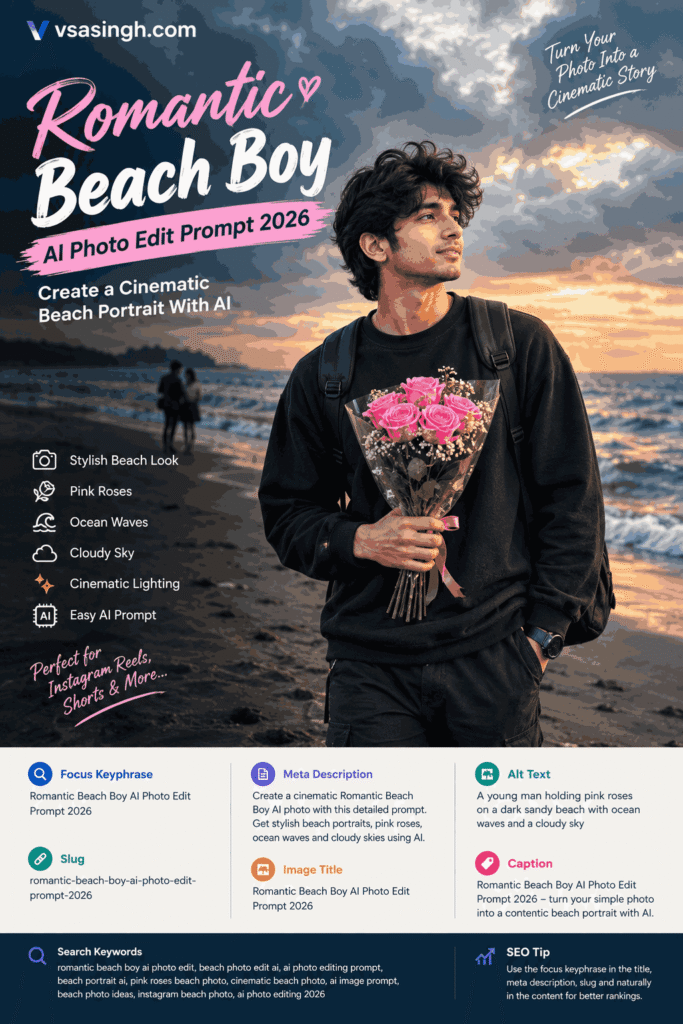
One concept that can create a particularly cinematic result is the Romantic Beach Boy AI Photo Edit Prompt 2026. It combines a beach environment, ocean waves, dramatic clouds, pink roses, casual clothing, and soft cinematic lighting to create a stylish portrait with a calm romantic atmosphere.
The best part is that you do not necessarily need a professional camera or an actual beach photoshoot. You can start with a suitable reference photograph and use an romantic beach boy ai photo edit prompt tool to experiment with the concept.
At vsasingh.com, we like exploring practical AI prompts that creators can actually experiment with. So, instead of simply sharing a short prompt, this guide explains the complete idea, how the prompt works, how to prepare your reference beach boy ai photo editing prompt image, how to improve the generated result, and how to create different versions for social media.
Whether you are interested in AI photography, creative portrait editing, Instagram content, or cinematic image generation, this guide can help you understand how to approach this style.
What Is the Romantic Beach Boy AI Photo Edit?
The Romantic Beach Boy AI Photo Edit is a creative portrait concept in which a normal reference photograph is transformed into a cinematic beach scene.
The main subject is placed near a dark sandy shoreline with ocean waves in the background. A bouquet of pink roses adds a soft visual accent, while casual clothing gives the portrait a modern appearance.
The sky is designed with dramatic clouds, creating a moodier environment than a typical bright beach photograph.
Instead of making the entire image extremely colorful, the concept relies on a balanced combination of darker tones, natural skin colors, pink flowers, muted ocean colors, and soft lighting.
This makes the result suitable for people who want something that looks more like an editorial portrait than a basic AI background replacement.
The concept can be adapted for:
- Instagram posts
- Instagram Reels covers
- YouTube Shorts thumbnails
- WhatsApp Status
- Profile images
- Pinterest content
- Personal AI portraits
- Creative photography experiments
- Social media photo edits
- AI-generated visual stories
Why Beach-Based AI Portraits Are Popular
A beach is one of the easiest environments to use when creating cinematic portraits because it naturally provides several visual layers. cinematic beach boy photo editing prompt
There is the subject in the foreground.
Behind the subject, there is the shoreline.
Further away, there are waves and the horizon.
Above everything, there is the sky.
This creates a natural sense of depth.
AI tools can use these layers to create an image that feels more like a planned photoshoot.
Adding a few carefully selected elements, such as flowers or a backpack, gives the portrait additional personality without making the composition unnecessarily complicated.
The goal is not to add as many objects as possible.
The goal is to make every important element contribute to the overall visual story.
The Visual Story Behind This Prompt
The concept is built around a simple idea: a quiet cinematic moment by the sea.
The dark beach creates the foundation of the composition.
The black casual outfit keeps the character’s appearance modern and understated.
The pink roses provide a contrasting color.
The ocean adds movement.
The cloudy sky creates atmosphere.
Soft lighting ties everything together.
When these elements are combined carefully, the result can feel like a still frame from a romantic cinematic photoshoot.
The image does not need dramatic action.
A calm pose, natural expression, and carefully designed environment can be enough to create an interesting photograph.
Romantic Beach Boy AI Photo Editing Prompt
Below is a freshly structured version of the prompt for creating this style.
AI Image Prompt
Use the uploaded reference photograph as the primary visual reference for the main subject. Preserve the person's recognizable facial appearance, natural hairstyle, general facial characteristics, and realistic overall appearance. Do not unnecessarily change the identity or make the face look heavily retouched.Create a cinematic vertical portrait of the subject standing naturally on a dark sandy beach beside the ocean.
The subject is holding a tasteful bouquet of fresh pink roses and wearing a simple black sweatshirt with a casual backpack. Keep the clothing realistic and naturally fitted.
The hairstyle should remain consistent with the reference photograph while looking naturally styled.
Place gentle ocean waves behind the subject and a dramatic overcast sky above the horizon. The beach should have realistic sand texture, subtle wet areas near the water, natural wave foam, and believable atmospheric depth.
Use a softly blurred background so the subject and bouquet remain the main points of focus.
If distant background figures are included, keep them small, unobtrusive, and strongly blurred so that the main subject remains the visual focus.
Create a subtle romantic cinematic mood using natural environmental details rather than excessive visual effects.
Use soft diffused daylight, realistic shadows, balanced exposure, natural skin texture, detailed clothing, realistic hair strands, and believable environmental lighting.
The final image should resemble a professionally photographed outdoor portrait rather than an artificial digital composition.
Use realistic photography depth of field, sharp focus on the subject, soft background separation, natural color balance, detailed ocean textures, cinematic atmosphere, editorial portrait composition, and a vertical social-media-friendly frame.
How to Create the Romantic Beach AI Photo
Creating this image is relatively simple, but the quality of the final result depends on several small decisions.
A basic workflow can look like this:
Choose Reference → Upload Image → Add Prompt → Generate → Review → Refine → Export
The first generation should be treated as a starting point.
If everything looks good, you can use the image as it is.
If some elements look unusual, refine the prompt and generate another version.
This approach is often more practical than trying to write an extremely complicated prompt from the beginning.
Step 1: Choose the Right Reference Photograph
Your reference image is one of the most important parts of the process.
Choose a photograph where the face is reasonably clear and the lighting is not extremely harsh.
A good reference image can have:
- Clear facial visibility
- Natural lighting
- Good resolution
- Visible hairstyle
- Minimal filters
- No major obstruction
- A relatively simple background
You do not necessarily need a professional studio photograph.
A normal, clear portrait can work well.
Avoid using extremely blurry images or photographs with heavy beauty filters if your goal is to maintain a natural appearance.
The AI needs enough visual information to understand the person it is supposed to represent.
Step 2: Upload Your Reference Image
- Once you have selected your photograph, upload it to an AI image editor that supports image references.
- Different AI platforms use different interfaces, so the exact upload process may vary.
- Look for the option that allows you to provide an image as a visual reference.
- After uploading the photograph, check that the platform has recognized the image correctly before generating the final scene.
- If the image is low quality or heavily cropped, you may get better results by starting with a clearer version.
Step 3: Add the Beach Prompt
Now add the complete AI prompt.
The prompt should establish the major visual components:
- Main subject
- Beach
- Ocean
- Clouds
- Pink roses
- Black sweatshirt
- Backpack
- Lighting
- Camera style
- Depth of field
- Vertical composition
Do not add unnecessary effects simply to make the prompt longer.
More words do not automatically mean a better image.
What matters is whether the instructions clearly communicate the visual idea.
Step 4: Generate the First Result
- Generate the image and examine the complete frame.
- At first, look at the image as a whole.
- Does it actually feel like a beach portrait?
- Does the subject stand out?
- Is the lighting believable?
- Does the sky match the environment?
- After that, zoom in and inspect the details.
Pay particular attention to:
- Face
- Eyes
- Hair
- Hands
- Roses
- Clothing
- Backpack
- Ocean
- Horizon
- Sand
- Shadows
AI-generated images can sometimes look excellent from a distance but reveal small errors when viewed closely.
Step 5: Improve Specific Problems
If something is not right, avoid changing the entire concept.
Instead, identify the specific problem.
For example, if the beach is excellent but the bouquet looks unusual, refine only the flower description.
If the face looks too artificial, focus on the identity and natural facial texture instructions.
If the background is too sharp, strengthen the shallow-depth-of-field direction.
This targeted approach makes the editing process easier.
How to Create a More Realistic Beach Background
A realistic beach is more than just blue water and sand. sunset beach boy ai photo editing prompt
Small environmental details make a difference.
The shoreline can include:
- Gentle wave foam
- Slightly wet sand
- Natural reflections
- Uneven sand texture
- A distant horizon
- Soft atmospheric haze
The ocean should not look perfectly symmetrical.
Natural water contains variations in wave size, movement, and reflections.
The same principle applies to the clouds.
A realistic cloudy sky should contain different levels of brightness and depth instead of looking like a flat grey background.
Why the Cloudy Sky Matters
- The cloudy sky is one of the defining elements of this concept.
- Bright sunlight would create a completely different mood.
- Soft clouds diffuse the available light and can produce gentle shadows across the subject.
- This helps create a more cinematic appearance.
- The clouds should still look natural.
- Avoid making them excessively dark unless you specifically want a storm-like scene.
- The purpose here is atmospheric photography rather than a dramatic weather disaster.
Using Pink Roses as the Main Color Accent
Pink roses provide an important visual contrast.
The subject’s dark clothing and the dark beach create a relatively muted foundation.
The flowers introduce a softer and brighter color.
This can naturally draw attention toward the hands and upper body.
For a realistic result, the bouquet should have:
- Natural petal shapes
- Varied flower sizes
- Realistic stems
- Natural arrangement
- Subtle color variations
AI may sometimes create flowers that look repetitive or overly perfect.
If this happens, ask for a naturally arranged bouquet with varied petals and realistic stems.
Choosing the Black Sweatshirt
The black sweatshirt keeps the outfit simple.
A complicated outfit could compete with the flowers and beach environment.
The sweatshirt also works well with the darker cinematic color palette.
If you want to create another version, you can experiment with:
- Dark hoodie
- Black jacket
- Charcoal sweatshirt
- Casual denim jacket
- Neutral overshirt
- Simple dark T-shirt
The clothing should remain consistent with the overall mood.
Adding a Backpack
The backpack is a small detail, but it can make the scene feel more natural.
Instead of making the subject look like they are posing specifically for a studio photoshoot, the backpack gives the impression of someone spending time near the beach.
Keep the backpack simple.
Avoid excessive logos or complicated patterns unless you specifically want them.
A plain dark backpack is generally easier to integrate into the composition.
Maintaining Natural Facial Appearance
When using a reference image, one of the main goals is to keep the person’s appearance recognizable.
The prompt should therefore avoid unnecessary facial transformations.
Useful instructions include:
- Preserve recognizable facial characteristics
- Keep natural skin texture
- Maintain the general hairstyle
- Avoid excessive beauty retouching
- Keep realistic facial proportions
- Use natural expressions
Remember that AI image generation can still introduce small differences.
A reference image improves the chances of consistency but does not guarantee pixel-perfect identity preservation.
Creating a Natural Expression
The expression can have a major impact on the mood.
For this concept, a calm and subtle expression usually works better than an exaggerated smile.
The subject can appear relaxed and thoughtful while standing near the ocean.
A natural expression makes the image feel more like a candid editorial photograph.
You can experiment with:
- Soft smile
- Calm expression
- Looking toward the camera
- Looking toward the ocean
- Slight side profile
Each variation can produce a different emotional feeling while keeping the same overall concept.
Understanding Cinematic Lighting
- Lighting is one of the most important parts of realistic AI photography.
- A cinematic portrait should not simply be bright.
- It should have a relationship between highlights and shadows.
- For this beach concept, soft outdoor lighting works well.
- Overcast conditions naturally reduce harsh shadows.
- The subject should receive lighting that appears consistent with the sky.
- For example, if the background shows heavy clouds but the face has an intense artificial spotlight, the result may feel unnatural.
- Try to keep the lighting soft and believable.
Why Depth of Field Is Important
- Depth of field determines how much of the background remains sharp.
- A shallow depth of field can keep the subject crisp while allowing the beach and ocean to gradually blur.
- This gives the image a professional portrait-photography appearance.
- However, do not blur everything.
- The viewer should still be able to recognize the environment as a beach.
- The best balance is usually:
- Sharp subject + recognizable but softly blurred environment
Common AI Image Problems
AI image generation is not always perfect.
Here are some issues you may encounter.
Unnatural Hands
Hands can sometimes appear distorted when the subject is holding flowers.
If this happens, simplify the pose and ask for a relaxed natural grip.
Strange Flowers
If the roses look artificial, specify realistic flowers with naturally varied petals and stems.
Artificial Skin
If the face looks overly smooth, ask for realistic skin texture and natural facial detail.
Wrong Clothing
If the outfit changes unexpectedly, describe the clothing more clearly.
Inconsistent Background
If the beach changes dramatically between generations, repeat the key environmental characteristics.
Overly Dramatic Colors
If the image looks too saturated, request natural color grading with subtle cinematic contrast.
How to Make the Image Look Like a Real Photograph
Adding terms such as “8K” or “ultra-realistic” can be useful, but they are not enough on their own.
A believable photograph depends on several factors.
Natural Lighting
The lighting should match the environment.
Realistic Perspective
The subject should have believable proportions relative to the beach.
Natural Depth
Foreground, subject, and background should have visual separation.
Realistic Texture
Skin, clothing, flowers, sand, and water should have believable textures.
Balanced Colors
Avoid excessive saturation.
Proper Composition
The subject should be positioned intentionally within the frame.
These details often matter more than simply adding more quality-related keywords.
Vertical Image for Instagram and Shorts
A vertical composition is useful for mobile-first platforms.
A 9:16 image can be adapted for:
- Instagram Reels
- YouTube Shorts
- Instagram Stories
- WhatsApp Status
- Mobile profile content
Keep the subject away from the extreme edges.
Leave enough space around the head and shoulders.
If you plan to add text later, leave some empty space in the composition.
Creating Multiple Beach Versions
Once you have the basic image, candid beach photo editing ai prompt you can create several variations without starting from scratch.
Sunset Version
Change the cloudy daylight into a warm sunset.
Use subtle orange and pink highlights.
Evening Version
Create a darker evening beach with soft ambient light.
Keep the face visible and naturally illuminated.
Monsoon Beach Version
Use a cloudy, slightly rainy environment with darker wet sand.
Keep the overall scene realistic.
Minimal Version
Remove most background elements and focus on the subject, roses, sand, and ocean.
Editorial Version
Use a more sophisticated fashion pose and a stronger portrait composition.
The main idea can remain the same while the visual style changes.
How to Use the Final Image on Social Media
After generating the final image, you can use it in several formats.
A single image can work as an Instagram post.
It can also become a Reel cover.
You could create several variations and turn them into a short slideshow.
For example:
Image 1: Wide beach portrait
Image 2: Medium portrait with roses
Image 3: Side profile
Image 4: Ocean-facing pose
Image 5: Close-up portrait
Adding subtle transitions and suitable music can turn these still images into a simple visual story.
Keep Your AI Prompt Focused
A common mistake is writing a prompt containing too many unrelated instructions.
The strongest prompts are often built around a clear visual idea.
For this concept, the essential elements are:
Reference person + dark beach + ocean + cloudy sky + roses + casual outfit + cinematic lighting + realistic photography
Everything else should support these elements.
If you add too many unnecessary objects, the AI may struggle to understand which parts are most important.
Reference Image and Privacy
If you are creating a personal AI portrait, use your own photograph or an image that you have permission to use.
Avoid uploading someone else’s private photograph without permission.
This is especially important if you plan to publish the resulting image publicly or use it for commercial purposes.
AI editing changes the visual content, but that does not automatically remove the rights or privacy considerations associated with the original photograph.
How to Get Better Results Through Multiple Generations
The first generation does not always need to be your final image viral beach portrait ai photo editing prompt.
Think of AI image creation as a creative workflow.
First Generation
Focus on getting the overall composition correct.
Second Generation
Fix the face, clothing, or background.
Third Generation
Improve small details such as flowers, hands, lighting, or depth of field.
Final Version
Choose the image that has the best overall balance rather than simply selecting the one with the most dramatic effects.
This method can be much more effective than constantly rewriting the entire prompt.
Quick Checklist Before Publishing
Before using your final image online, inspect these areas:
Face
Does the subject look natural and recognizable?
Hair
Does the hairstyle look believable?
Hands
Do the hands and fingers look normal?
Roses
Do the flowers have realistic shapes?
Clothing
Does the sweatshirt look natural?
Backpack
Does it sit naturally on the subject?
Beach
Does the sand have realistic texture?
Ocean
Do the waves look believable?
Sky
Does the cloud lighting match the rest of the scene?
Shadows
Do the shadows appear consistent with the environment?
Composition
Is the subject positioned correctly?
Resolution
Does the image remain sharp when viewed at full size?
A few minutes of checking can prevent obvious AI artifacts from appearing in the final post.
Final Thoughts
The Romantic Beach Boy AI Photo Edit Prompt 2026 is a simple but flexible concept for creators who want to experiment with trending instagram reels beach boy ai prompt.
The visual idea combines a dark sandy beach, ocean waves, dramatic clouds, pink roses, casual clothing, and soft natural lighting. Together, these elements can create a portrait that feels more like a planned outdoor photoshoot than a basic background replacement.
The most important step is starting with a good reference photograph.
A clear image gives the AI more useful information about the person. From there, the prompt can establish the environment, clothing, flowers, lighting, camera style, and composition.
Do not worry if your first generation is not perfect.
AI-generated images can sometimes produce unusual hands, flowers, facial details, clothing textures, or background elements. Instead of abandoning the entire concept, identify the specific issue and adjust that part of the prompt.
You can also experiment with different versions of the same idea. Try a sunset beach, cloudy evening, minimal portrait, editorial composition, or another suitable outfit while keeping the main visual identity consistent.
For social media creators, the vertical format makes the concept especially useful for Reels covers, Stories, Shorts, Status updates, and portrait posts.
Most importantly, focus on creating an image that feels visually coherent rather than simply adding as many effects as possible. A natural face, believable lighting, realistic ocean, properly arranged flowers, and clean composition will usually contribute more to the final result than a long list of exaggerated effects.
At vsasingh.com, our aim is to make AI image-generation ideas easier to understand and experiment with. A good prompt is not just a collection of keywords—it is a visual direction that tells the AI what the subject should look like, where the scene should take place, how the lighting should behave, and what the final photograph should feel like.
So, start with your own suitable reference photograph, add the prompt, generate the first version, inspect the details, and make small improvements where necessary.
With a little experimentation, the basic beach concept can become a complete collection of cinematic AI portraits for your personal creative projects and social media content.

Leave a Reply